

Binding Machine Buyer's Guide by Volume
Most binding machine buying decisions go wrong for the same reason: people shop by price or feature list before they know their own volume. A desktop machine rated for 20 binds a week will overheat and wear out fast in a copy shop doing 50 a day. A production unit is overkill — and overpriced — for an agent binding a dozen listing presentations a month.
This guide sorts binding machines by the one variable that actually predicts whether a purchase will work out: how many documents you bind per month. If you haven't already, it's worth reading our complete guide to thermal binding first — it covers how thermal binding machines work end to end. This article picks up at the buying decision itself.

Why Volume Should Drive the Purchase, Not Price
A binding machine is a piece of equipment with a duty cycle, not just a spec sheet. Every thermal binding machine is built around an expected workload: how many heat cycles per hour it can run, how much recovery time it needs between binds, and how it dissipates heat over a full day. Buy under your volume and you'll run the machine harder than it's designed for, which shows up as slower cycles, inconsistent bonds, and a shorter machine lifespan. Buy over your volume and you're carrying cost and footprint you don't need.
Before comparing binding machines, get a real number: count how many documents you bound last month, or estimate from what's coming (a new training program, a print-shop service line, a busy real estate season). That number is what everything else in this guide is built around.
The Three Binding Machine Tiers
| Tier | Monthly volume | Spine range | Best for |
|---|---|---|---|
| Desktop / home office binding machine | Under 50 binds | 2–12 mm | Solo professionals, small offices |
| Office / small business binding machine | 50–300 binds | Up to 40 mm | Copy shops, schools, mid-size teams |
| Commercial / production binding machine | 300+ binds | Full range, batch capable | Print shops, corporate print rooms |
Desktop Binding Machines (Home Office & Low Volume)
A desktop binding machine is the right call if you're binding under roughly 50 documents a month, single proposals, listing presentations, short reports, or course handouts. These machines are compact enough for a desk, use a simple timer, and typically cover a 2–12 mm spine range, which handles most single-topic documents up to around 120 pages.
This is the most common entry point for a book binding machine for home use, and for good reason: the cost is low, the learning curve is minutes, and there's no dedicated equipment room required. The tradeoff is capacity — desktop units aren't built for back-to-back cycling all day, and pushing one past its rated volume is the fastest way to shorten its lifespan.
Office & Small Business Binding Machines (Medium Volume)
Once you're binding somewhere between 50 and 300 documents a month, it's worth stepping up to an office binding machine built for higher-capacity, more frequent use. These machines typically support spine widths up to 40 mm, add a cooling clamp to speed up throughput, and give more control over heat and timer settings than a basic desktop model.
This tier is where most copy shops, schools, and mid-size business offices land. It's also the point where thermal binding covers and steel spines become a real line-item worth planning for, since higher volume means going through consumables faster — see our guide to choosing the right spine size to avoid over- or under-ordering.
Commercial & Production Binding Machines (High Volume)
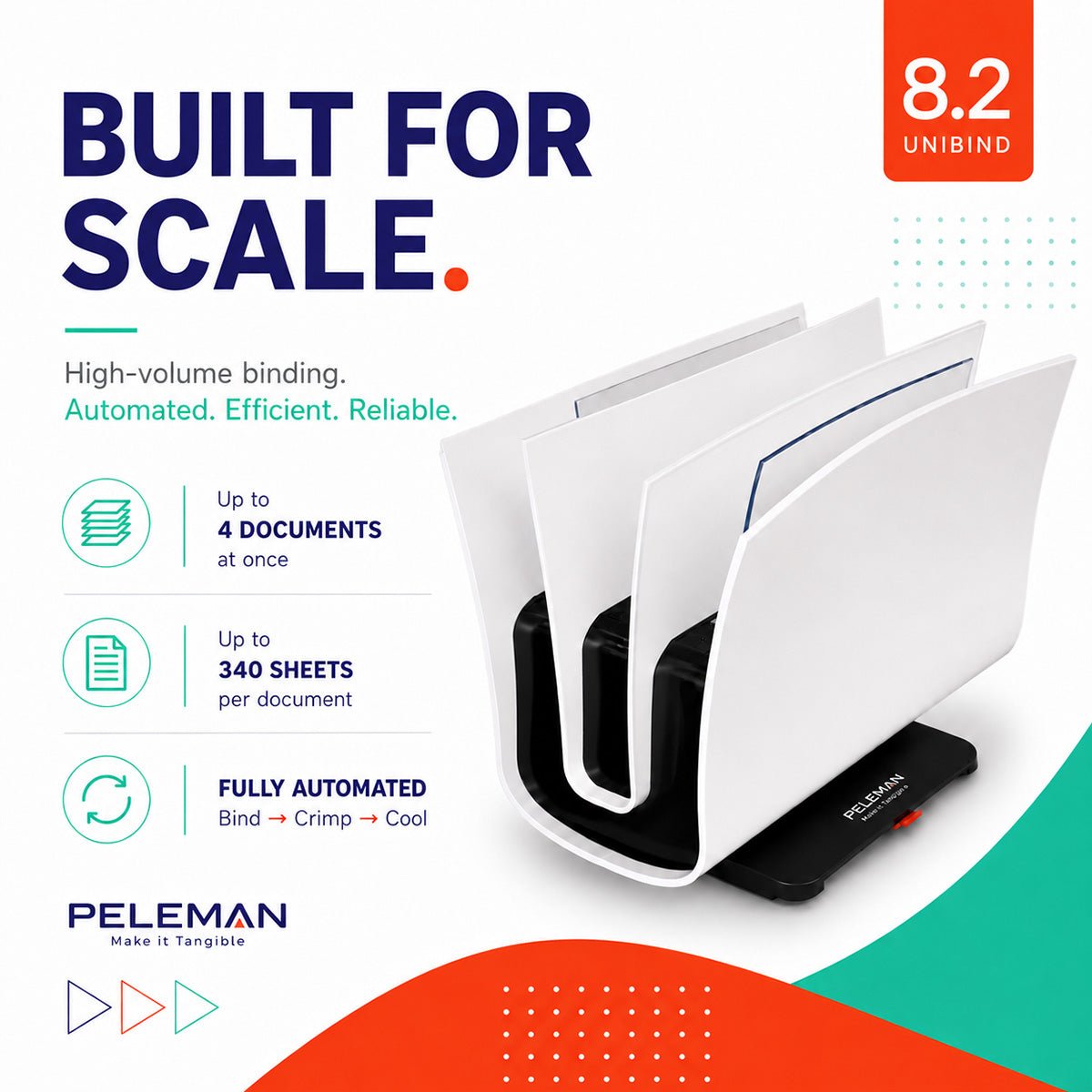
At 300+ binds a month, you're in commercial binding machine territory. Production-grade equipment adds batch or sequential cycling, a wider and more robust heating system, and faster recovery time between binds, all built to run continuously without the wear a lower-tier machine would show under the same load.
This is the right tier for print shops, corporate print rooms, and service bureaus offering document binding as a standing service. It's also the category where "professional binding machine" and "heavy duty binding machine" searches typically belong — buyers here are usually replacing failing lower-tier equipment that was pushed past its intended volume.
Thermal Binding vs. Other Binding Methods, by Volume
Thermal binding isn't the only document binding method, but it's the one that scales most predictably across volume tiers, since the machine and the binding spine sizes don't change fundamentally between a 20-bind month and a 300-bind month, only the equipment's throughput does.
- Thermal binding vs. spiral binding: Spiral (coil) binding allows pages to lie fully flat and is common for workbooks, but it requires a punch step and doesn't give the same seamless, book-like spine. Thermal binding is faster to run at volume since there's no punching stage.
- Thermal binding vs. comb binding: Comb binding is inexpensive and allows pages to be added or removed, but the plastic comb looks less professional and can loosen with repeated handling — a real issue at higher volumes where the same documents get reused often.
- Perfect binding and PUR binding produce a bookstore-quality spine but need dedicated, higher-cost equipment and are typically only worth it at true production volume for short-run book printing, not standard business document binding.
For most businesses moving from occasional binding to a real monthly volume, a thermal binding machine remains the most practical professional binding method: fast, clean, and it scales by machine tier rather than by binding method.
What Else to Budget For as Volume Grows
A binding machine is only part of the setup. As monthly volume increases, so does consumable spend and the operational details around it:
- Binding covers and steel spine binding covers — higher volume means ordering in bulk, which is also where per-unit cost drops meaningfully.
- Spine size range — a higher-volume office typically needs to stock two or three spine sizes rather than one; see the spine size guide for sizing by page count.
- Service and warranty access — a machine running 300+ cycles a month needs a vendor with accessible parts and service, not just a low upfront price.
- Storage — bulk binding supplies (covers, spines) need dry, flat storage to avoid warping before use.
Common Buying Mistakes by Volume Tier
- Buying a desktop machine for office-scale volume. It'll technically bind documents, but expect slower cycles and earlier wear.
- Overbuying a production machine for occasional use. Idle high-capacity equipment is a sunk cost with no throughput benefit.
- Ignoring spine range when volume includes thick documents. A machine rated for high cycle counts but a narrow spine range still can't handle a 300-page manual.
- Not budgeting consumables into the total cost. The machine is a one-time purchase; covers and spines are ongoing, and volume determines how fast that spend adds up.
Frequently Asked Questions
What's the best binding machine for small business use? For most small businesses binding under 300 documents a month, an office-tier thermal binding machine with a spine range up to 40 mm covers the vast majority of use cases without the cost of production equipment.
What's the best thermal binding machine for home use? A compact desktop thermal binding machine with a 2–12 mm spine range and a simple timer is typically the right fit for home office use, single-topic documents, and occasional binding needs.
How do I know if I need a commercial binding machine? If you're consistently binding more than roughly 300 documents a month, or running back-to-back cycles for extended periods, a commercial or production-grade binding machine will handle the duty cycle better than a desktop or office unit pushed past its rated capacity.
Do binding machines come in manual and electric versions? Most modern thermal binding machines are electric, with heat and timer control built in. Manual binding equipment still exists for methods like comb or coil binding, where the punching and inserting steps are done by hand rather than heat-activated.
Can one machine serve more than one volume tier? Office-tier machines generally have some headroom above their core range, but running a machine consistently at the top of its rated volume shortens its service life. If your volume is trending up, it's usually worth sizing one tier higher than your current need.
Browse the full range of thermal binding machines across desktop, office, and production tiers to find the one that matches your volume.
How to Choose the Right Spine Size for Thermal Binding (Full Sizing Guide)
Binding Machine Maintenance & Troubleshooting Guide