

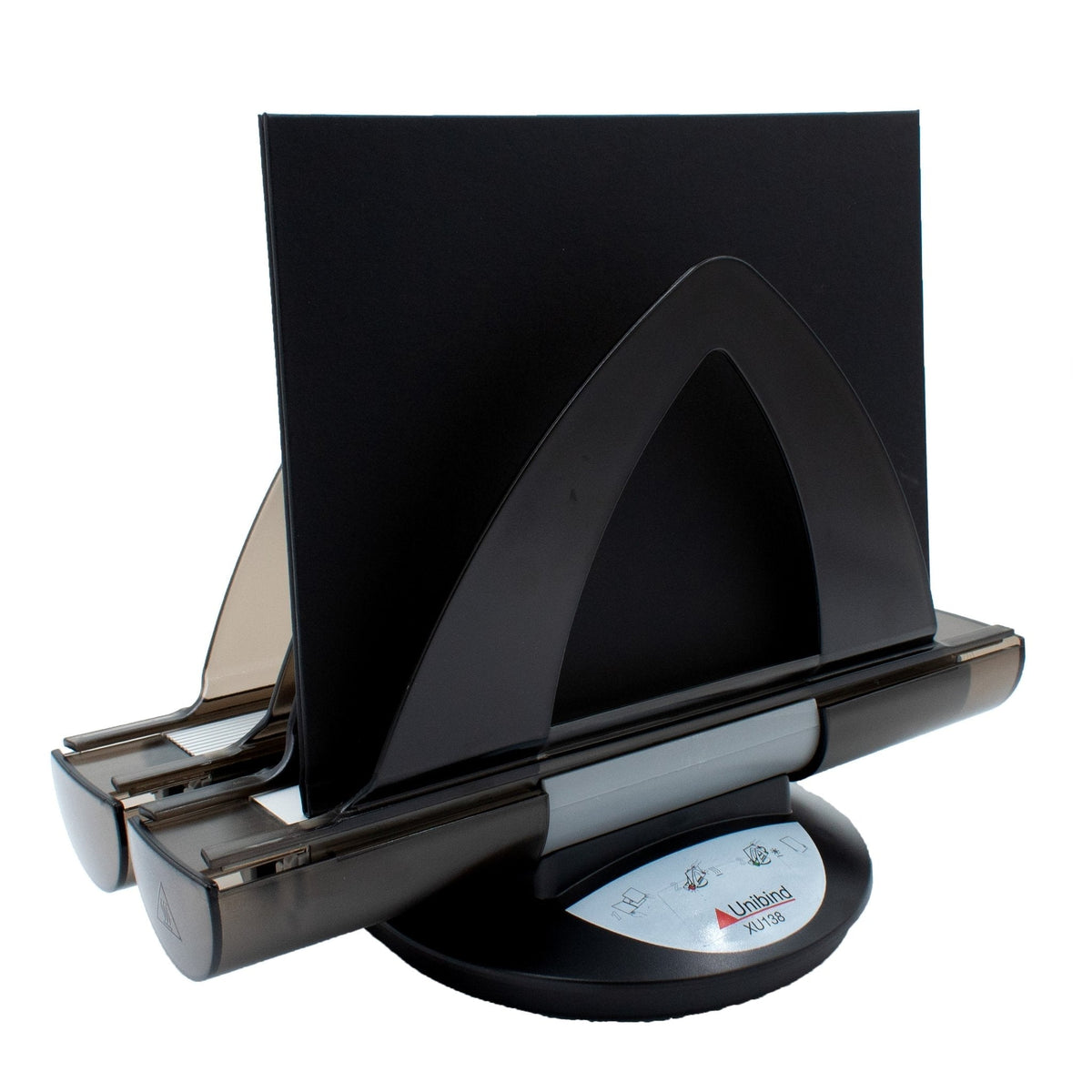
What Print Shops Actually Need in a Thermal Binding Machine
Monday morning, three jobs come in before lunch: a 40-page report that needs to ship same-day, a 250-page training manual with a custom cover, and a short run of ten manuscripts for a self-publishing client. None of them are the same spine size. None of them are the same cover finish. And whatever machine is running that queue has to handle all three without becoming the bottleneck.
That's the actual test for print shop binding equipment, and it's a different test than the one most spec sheets are written to answer.
Question One: What's Your Actual Job Mix, Not Your Average Job?
Most binding machine comparisons implicitly assume one kind of job repeated at volume. A print shop rarely works that way. The queue on any given day might include:

The equipment question isn't "can it bind 300 books an hour," it's "can it move between a 40-page report and a 300-page manuscript without a second machine, a manual reconfiguration, or a noticeable slowdown." A machine that excels at one job type and struggles with the rest isn't a commercial solution, it's a specialized tool wearing a commercial price tag.
Custom printed report covers, branded presentation covers, and spine label printing belong on this list too, not as an afterthought. For many shops, cover customization is a billable line item in its own right, which means the equipment's cover ecosystem is part of the revenue equation, not just the finishing step.
Question Two: What's Your Real Cost Per Bind?
Machine price is what you pay once. Cost per bind is what determines whether every job afterward makes money, and it's the number worth calculating before comparing sticker prices.

The part people underestimate is the labor term. A machine with a slow cycle or single-book capacity doesn't just take longer, it consumes staff time that could be running another job. A shop binding at real volume often finds that a somewhat pricier machine with batch cycling and a faster recovery time produces a lower cost per bind than a cheaper single-cycle machine, simply because less labor is tied up per finished book.
Question Three: What Happens When It Breaks Mid-Job?
This is the question spec sheets never address, and it's the one that matters most once a machine is actually running production. Downtime on a commercial machine isn't an inconvenience, it's lost revenue and a missed deadline for a client who's now calling to ask where their job is.
A few things determine how bad that scenario actually gets:
- Who you bought from. A machine, its covers, and its warranty coming from three different companies (manufacturer, reseller, cover supplier) means three different points of contact to sort out during an outage. Buying direct from the manufacturer collapses that into one relationship, which matters far more during a breakdown than at purchase.
- What the warranty actually covers, and how fast it's honored. Peleman includes a 1-year manufacturer's warranty on every binding machine, handled directly and stateside rather than routed through an overseas claims process, the kind of detail that only matters on the day you need it.
- How easy it is to reorder consumables under pressure. Wholesale binding supplies and bulk cover orders need a supply chain that doesn't add a week of lead time to an already tight job.
- How long the equipment has been proven at scale. Peleman's steel spine systems have been manufactured since 1979 and are running in more than 2,500 corporations today, a track record worth weighing before standardizing a shop's production line on any given system.
Two Binding Technologies, One Practical Difference
Most thermal binding equipment splits into two approaches, and it's worth understanding which one you're actually buying before comparing throughput numbers.
EVA hot-melt adhesive systems bind pages with a glue strip built into the cover spine, activated by heat. Some versions reinforce the strip with a fiber or mesh layer to improve grip. It's a proven, widely used approach, but bond strength depends on adhesive formulation, and quality can degrade if covers are stored improperly or reheated repeatedly for edits.
Steel spine and resin systems, what Peleman builds, use a rigid U-shaped steel channel pre-loaded with thermal resin. The resin melts around the pages and resolidifies as one solid block, with the steel channel physically holding that shape afterward rather than relying purely on adhesive strength. For a shop shipping finished books out the door, that structural rigidity tends to hold up better through handling and transit than an adhesive-only bond. The spine size guide covers how steel spine sizing works if you're comparing specific models.
Neither approach is wrong, but they're not interchangeable either, and the right one depends on what you're binding and how it gets handled after it leaves your shop.
Before You Compare Spec Sheets
Pull these numbers together first, they'll tell you more than any single machine's marketing page:
- Your actual job mix over a typical week, not your best-case average job.
- Your current (or estimated) cost per bind at the volume you're running.
- What a day of downtime would actually cost you in missed deadlines.
- Whether cover customization is a service you charge for, or one you're currently unable to offer.
Machines that look identical on a spec sheet often perform very differently once you run those four numbers against your actual shop, not a generic use case.
Common Questions
Is a commercial thermal binding machine worth it for a smaller shop? Only if job variety or volume genuinely require it. If most jobs fall in a narrower range, a high-capacity office-tier machine (see the buyer's guide by volume) is often the more efficient starting point, with room to upgrade later.
How is cost per bind different from just comparing machine prices? Machine price is a one-time number. Cost per bind accounts for consumables, labor time per job, and the machine cost spread across its lifetime output, which is what actually determines profit margin on every job going forward.
Is steel spine binding more durable than EVA adhesive binding? Steel spine systems hold their shape through a rigid channel rather than relying purely on adhesive strength, which tends to perform better for finished documents that get shipped or handled repeatedly after leaving the shop.
What's the biggest risk with commercial binding equipment that doesn't show up on a spec sheet? Downtime and how it's handled. A machine, covers, and warranty coming from separate vendors means more friction during an outage than buying direct from a single manufacturer with stateside warranty service.
Whatever equipment you land on, run the job mix and cost-per-bind numbers against it before deciding, not just the throughput claim on the box. Thermal binding machines built on Peleman's steel spine system are worth including in that comparison.
Best Thermal Binding Machines for Law Offices & Legal Document Binding
Unibind 8.1 vs. Fellowes Helios 30 — Full Comparison