
Unibind 8.1 vs. Fellowes Helios 30: Full Comparison
Quick verdict: The Helios 30 binds more sheets per book (300 vs. 60) at a lower upfront price. The Unibind 8.1 binds faster on every job after the first (no warm-up wait), holds a stronger structural bond via a steel spine instead of an adhesive strip, and works with hard covers, which the Helios doesn't. Which one's "better" depends entirely on what you're binding and how often. The full breakdown is below.

The Two Machines, in Plain Terms
The Fellowes Helios 30 is a widely available desktop thermal binder sold through office retailers, Amazon, Staples, Walmart, mybinding, and similar. It uses a thermal binding cover with an adhesive strip built in: heat softens the adhesive, the pages bond to it, done.
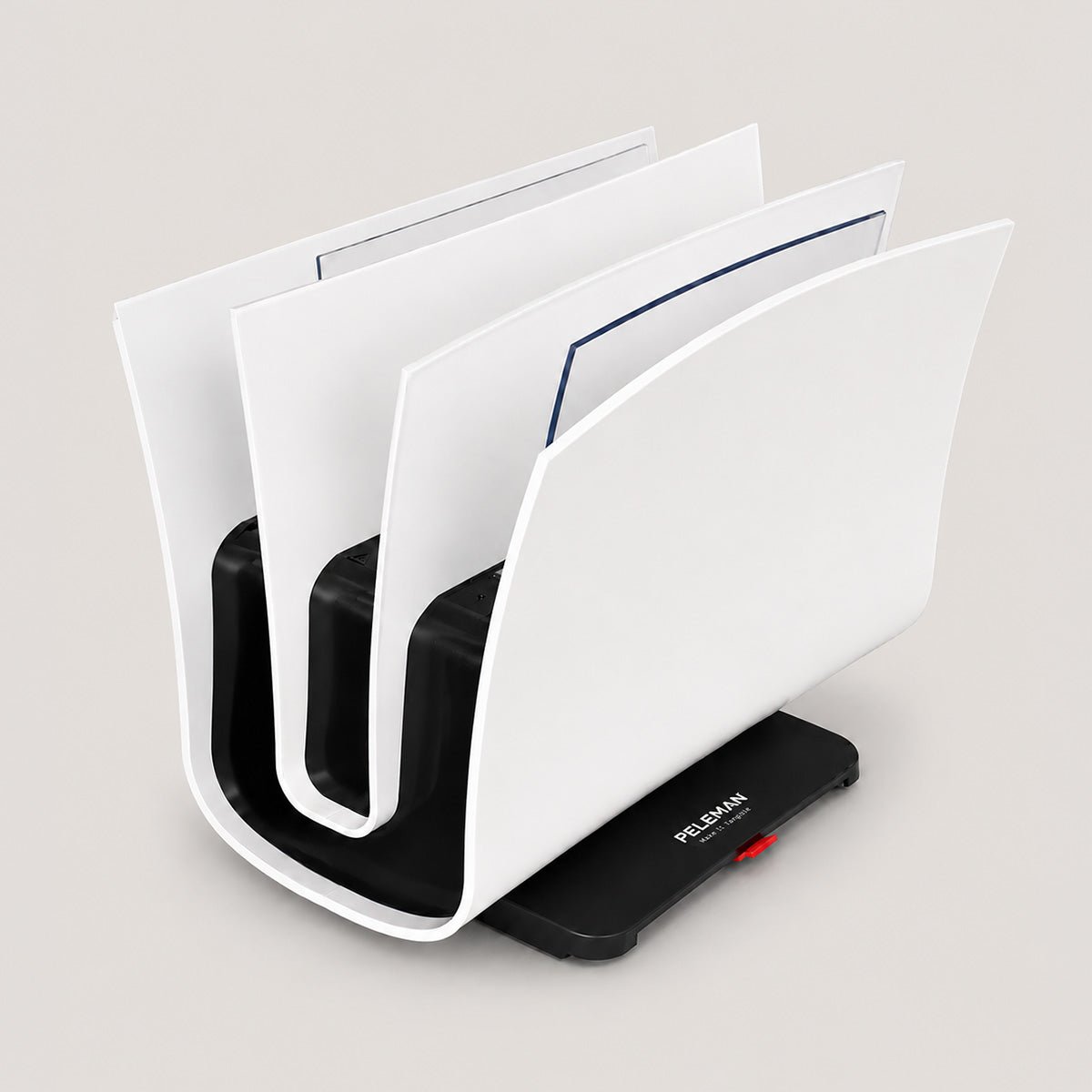
The Unibind 8.1 is sold direct from Peleman, the manufacturer, and uses a different underlying system: a steel spine embedded in the cover, pre-loaded with thermal resin. Heat activates the resin, and an automatic crimper then compresses the steel channel around the pages for a tighter, more permanent hold, a mechanical step the Helios doesn't have.
That difference in mechanism is the reason most of the comparisons below split the way they do.
Round by Round
Round 1: Raw Capacity Helios 30 wins outright here, it binds up to 300 sheets in one book. The Unibind 8.1 tops out at 60 sheets. If your typical job is a thick manual or a 500-page report, the Helios's higher single-book ceiling is the more relevant spec, or you'd want to look at Unibind's higher-tier 8.2, which handles up to 340 sheets.
Round 2: Speed, After the First Bind This is where it flips. The Helios needs a 4-minute heat-up before its first bind of the session, then 1–3 minutes per cycle after that. The Unibind 8.1 has no warm-up at all, the cover's steel spine triggers the machine the moment it's inserted, and the full cycle (heat, crimp, cool) runs about 60 seconds. For someone binding one or two documents sporadically through the day rather than running a continuous batch, that eliminates a repeated 4-minute wait every time the machine's gone idle.
Round 3: Bond Strength and Durability The Helios relies entirely on an adhesive strip bonding to the page edges. It works, and it's a proven, widely used approach. The Unibind 8.1 adds a mechanical step on top of the resin bond: the automatic crimper physically compresses a steel channel around the pages, so the hold isn't relying on adhesive alone. For documents that get handled repeatedly or need to survive shipping, that mechanical crimp is a meaningful structural difference, not just a marketing point.
Round 4: Cover Compatibility The Helios is documented by its own resellers as intended for soft covers only, hard cover binding isn't supported. The Unibind 8.1 works across Peleman's full cover range, hard, soft, flex, and spine covers, so the same machine handles a quick soft-cover report and a presentation-grade hardcover book without switching equipment.
Round 5: Price The Helios 30 typically retails in the $370–$450 range depending on the retailer. The Unibind 8.1 is $1,249.99 direct from Peleman. This is a real gap and worth being upfront about, it's not a close call on sticker price alone.
Round 6: Where You Buy It and What Happens After The Helios is sold through third-party retailers, meaning your warranty and support path runs through wherever you bought it, though Fellowes backs it with a 2-year limited warranty. The Unibind 8.1 is sold direct from Peleman with a 1-year manufacturer's warranty handled in-house, one company for the machine, the covers, and any support you need afterward.
Side-by-Side Spec Sheet

The Honest Trade-Off
Here's the actual decision, stripped of marketing: the Helios wins on capacity-per-book and upfront price. The Unibind 8.1 wins on per-use speed, bond durability, and cover versatility, at roughly 3x the price. Neither machine is objectively better, they're built around different assumptions about what "binding" needs to handle.
If your volume is low and sporadic (a handful of documents a week, mostly soft-cover reports under 60 sheets), the 4-minute Helios warm-up is a minor inconvenience and the price gap is hard to ignore. If you're binding daily, mixing document types, or need anything hardcover, the Unibind 8.1's no-warm-up workflow and broader cover range start paying for themselves in time saved and fewer machine changeovers.
Who Actually Fits Which Machine
| If you are... | The better fit is likely... | Why |
|---|---|---|
| A small office binding occasional reports under 60 sheets, budget-conscious | Fellowes Helios 30 | Lower price, capacity headroom for thicker occasional jobs |
| An office binding daily or several times a day, mixed document sizes | Unibind 8.1 | No repeated warm-up wait, faster real-world throughput |
| Producing anything that needs a hardcover finish (portfolios, presentation books, closing binders) | Unibind 8.1 | Helios doesn't support hard covers; Unibind does |
| Binding client-facing or archival documents that need to hold up over time | Unibind 8.1 | Mechanical crimp adds durability beyond adhesive alone |
| Occasionally binding a single very thick document (300+ sheets) and nothing else | Fellowes Helios 30, or Unibind 8.2 for higher steel-spine capacity | Helios's single-book ceiling is higher than the 8.1's |
For more on what your actual binding volume should drive in a purchase decision, our buyer's guide by volume walks through that math in more depth. And if you're weighing whether to buy any binding machine at all versus outsourcing, the in-house vs. outsourcing comparison covers that decision separately.
Where the Unibind 8.1 Fits in Peleman's Lineup
The 8.1 sits in the middle of Peleman's four-machine range: the Unibind 60 is the compact entry point, the 120 adds a manual crimper and higher capacity, the 8.1 automates that crimping step for consistent, repeatable results, and the 8.2 scales further with multi-document batch binding up to 340 sheets. Every tier uses the same steel spine and resin system, and any Peleman cover works with any Peleman machine, so upgrading later doesn't mean replacing your cover stock.
Best Thermal Binding Machines for Print Shops
How to Fix Pages Falling Out of a Thermal-Bound Document