

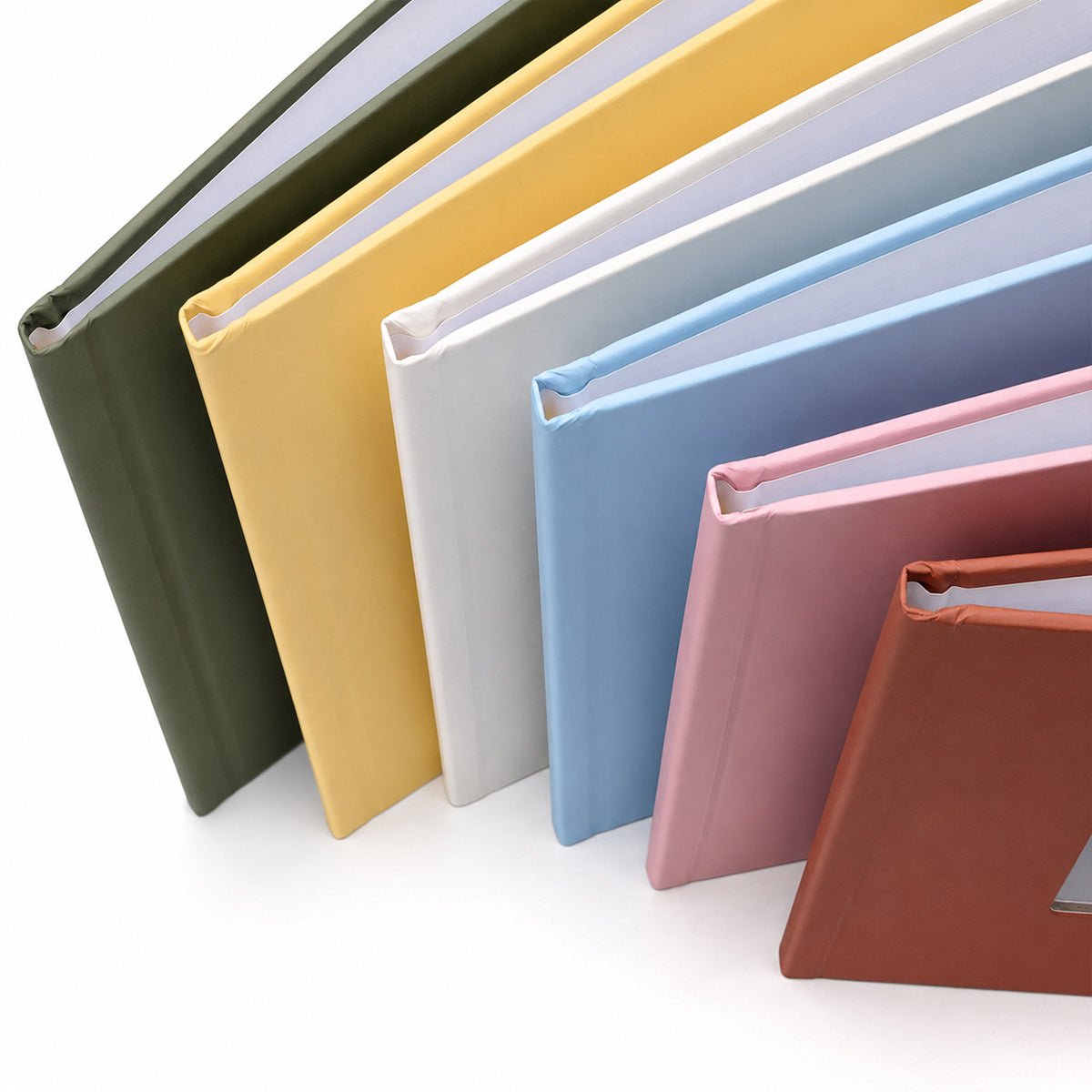
The material is the first thing a reader feels, long before they read a word. Here are the four most common cover materials, profiled the way you would judge a fabric swatch. They are one part of our complete binding covers guide.
Leather-look: the executive finish
Leather-look binding covers mimic the grain and weight of leather without the cost or upkeep. They signal authority, which is why they turn up on annual reports and board books.
• Feel: smooth, substantial, slightly cool.
• Best for: executive reports, proposals, awards.
• Watch out for: fingerprints on the darkest shades.
Poly: the workhorse
Polypropylene covers are flexible, tear-resistant and easy to wipe clean. Clear binding covers are commonly made from poly, which makes them popular where the first page should show through.
• Feel: smooth and light, with some flex.
• Best for: training manuals, frequently handled documents.
• Watch out for: they can scratch if stacked without protection.

Cardstock: the economical choice
Heavy paper stock gives you a printed, colour-friendly cover at a low cost. It is the usual choice for soft binding covers and high-volume runs.
• Feel: matte and paper-like.
• Best for: classroom sets, internal reports, short-life documents.
• Watch out for: corners and edges wear faster than poly or leather-look.
Linen: the classic texture
Linen binding covers have a woven surface that reads as traditional and considered. It is the same texture people associate with hardcover books.
• Feel: textured, warm.
• Best for: thesis and dissertation binding, legal and academic documents, memory books.
• Watch out for: a textured surface makes fine printing less crisp.
Quick rating table
|
Material |
Premium feel |
Durability |
Cost |
|
Leather-look |
High |
High |
Higher |
|
Poly |
Medium |
High |
Medium |
|
Cardstock |
Low to medium |
Medium |
Low |
|
Linen |
High |
Medium to high |
Medium to higher |
Ratings are general guidance. Specific products vary.
Which one should you choose?
Start with the audience, not the material. A client deliverable justifies leather-look. A classroom set does not. For more on the clear option, read clear/frosted vs. solid covers, and for a step-by-step shortlist see our buying guide. Peleman's thermal covers come as Spine, Flex, Soft, Hard and Custom, so you can compare finishes in the thermal binding collection.
Keep reading
• how binding covers work: Start here if you are new to covers.
• the pros and cons of clear covers: Decide when to show the first page and when to hide it.
• the anatomy of a binding cover: Learn what each part of a cover does.
• executive report covers: See what makes a cover premium.
• our binding cover buying guide: Answer five questions and pick the right cover.
Matched your material to your document? Peleman has manufactured binding solutions since 1979 and serves more than 2,500 corporate clients. You buy manufacturer-direct, with a 1-year US warranty and same-week shipping from Georgia, and US orders over $99 ship free. Shop the full thermal binding collection.
Binding Covers vs Presentation Covers: What's the Difference?
Clear/Frosted vs Solid Binding Covers: Pros & Cons